

Commercial vehicles play a vital role in keeping goods and people moving. From heavy-duty trucks and trailers to buses and other fleet vehicles, these vehicles often operate for long hours, carry substantial loads, and travel across a wide range of road and weather conditions.
Under these demanding conditions, the braking system must perform consistently and reliably. One of the most important components within a drum brake system is the brake lining.
Brake linings provide the friction needed to slow or stop the vehicle. While they may seem like a relatively small component compared with the overall vehicle, their performance can have a major impact on braking efficiency, maintenance, operating costs, and road safety.
In this article, we explore why brake lining quality matters for commercial vehicles and what fleet owners, truck operators, and maintenance professionals should consider when selecting brake linings.
What Is a Brake Lining?
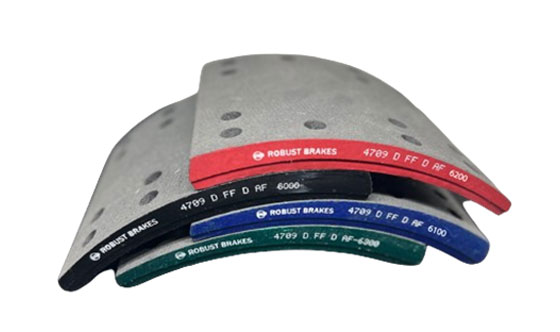
A brake lining is the friction material attached to a brake shoe in a drum brake system.
When the brake is applied, the brake shoe pushes the lining against the inside surface of the rotating brake drum. The friction generated between the lining and drum slows the wheel and helps bring the vehicle to a controlled stop.
Brake linings are engineered with specific friction characteristics and are available in different formulations for different vehicle applications.
The right lining must be compatible with the brake system and suitable for the vehicle's operating conditions.
Why Brake Lining Quality Matters
Commercial vehicles can place significant demands on their braking systems. A loaded truck traveling at highway speed has substantial kinetic energy that must be controlled safely when the brakes are applied.
A quality brake lining can contribute to:
- Consistent braking performance
- Predictable friction characteristics
- Controlled wear
- Appropriate heat resistance
- Longer service life
- Reduced maintenance requirements
- Reliable operation under demanding conditions
However, brake lining quality should always be considered alongside correct application, proper installation, brake adjustment, drum condition, and regular inspection.
1. Reliable Braking Performance
One of the most important functions of a brake lining is to provide consistent friction.
Commercial vehicles may encounter frequent stops, traffic congestion, steep descents, heavy loads, and changing road conditions. The braking system needs to respond predictably under these circumstances.
A brake lining selected specifically for the application can help provide consistent friction characteristics across the expected operating range.
This is particularly important for fleet operators because predictable braking performance helps drivers operate vehicles with greater confidence.
2. Managing Heat During Braking
Every time a vehicle brakes, kinetic energy is converted into heat.
The heavier and faster the vehicle, the greater the amount of energy that the braking system may need to manage.
Repeated braking can increase temperatures within the brake assembly. This makes thermal performance an important consideration when selecting brake lining material.
Brake linings intended for commercial applications should be selected according to the operating requirements of the vehicle and brake system.
For example, a vehicle that frequently travels through mountainous areas may experience substantially different braking demands from a truck that primarily travels on flat highways.
3. Supporting Consistent Friction
Brake lining material is formulated to produce specific friction characteristics.
The goal is not simply to produce as much friction as possible. Instead, the friction characteristics need to be appropriate for the brake system and vehicle application.
Consistent friction can contribute to predictable brake response and help the braking system operate as intended.
Using an unsuitable lining material may affect braking characteristics, wear patterns, and overall brake performance.
4. Reducing Premature Wear
Brake components are wear items, and eventually they need to be replaced. However, appropriate-quality brake linings can help provide controlled and predictable wear when properly matched to the application.
Premature lining wear can result in more frequent maintenance and increased operating costs.
Fleet operators should consider the total cost of ownership rather than focusing solely on the purchase price of the lining.
A product that provides appropriate service life may offer better value than an inexpensive component that requires frequent replacement.
5. Protecting Other Brake Components
Brake lining performance can affect the condition of other components in the brake assembly.
The brake lining and drum operate together, and problems such as abnormal wear, improper friction characteristics, contamination, or incorrect fit can contribute to unwanted wear patterns.
Whenever brake linings are replaced, technicians should inspect the associated brake components, including the drum and relevant hardware.
Replacing the lining without addressing other underlying brake problems may lead to repeated maintenance issues.
6. Supporting Fleet Reliability
For fleet operators, vehicle downtime can be expensive.
A truck that is unavailable because of unexpected brake maintenance can affect delivery schedules, driver productivity, and fleet utilization.
Using correctly specified brake linings and maintaining a consistent inspection program can help fleet managers identify wear before it becomes a larger maintenance problem.
A well-managed brake maintenance program can help improve vehicle availability and reduce unexpected repairs.
7. Quality Can Affect Maintenance Costs
The initial price of a brake lining is only one part of its overall cost.
Fleet managers should also consider:
- Expected service life
- Replacement frequency
- Labor costs
- Vehicle downtime
- Related component wear
- Maintenance requirements
- Product consistency
A high-quality brake lining that performs appropriately for its intended application may provide better long-term value than a lower-cost product that requires frequent replacement.
This is why purchasing decisions should consider both performance and total operating cost.
8. Correct Application Is Just as Important as Quality
A quality brake lining is not automatically the right brake lining for every vehicle.
Commercial vehicles have different brake systems, axle configurations, loads, and operating conditions. A lining that works well in one application may not be appropriate for another.
Before selecting a brake lining, verify:
- Vehicle make and model
- Brake system
- Axle application
- Brake shoe specifications
- Brake drum specifications
- Required friction characteristics
- Vehicle operating conditions
- Manufacturer or supplier recommendations
Correct application is essential for achieving the expected performance of the component.
9. Brake Drum Condition Matters
Brake linings do not work independently. They operate against the brake drum, so the condition of the drum should be evaluated whenever brake linings are replaced.
A drum with excessive wear, cracks, scoring, heat damage, or other problems can affect the performance of a new lining.
Before installing new linings, technicians should inspect the drum and other relevant brake components and determine whether they meet the applicable service requirements.
This can help prevent premature wear and inconsistent braking.
10. Proper Installation Is Essential
Even a high-quality brake lining can perform poorly if it is installed incorrectly.
Installation should follow the appropriate service procedures and specifications for the specific brake system.
Technicians should ensure that:
- The correct lining is being used
- The lining is properly secured to the shoe
- Brake components are correctly assembled
- Related hardware is in suitable condition
- The brake system is properly adjusted
- The brake assembly is inspected after installation
For commercial vehicles, professional inspection and maintenance are particularly important because of the loads and operating conditions involved.
Signs of Brake Lining Problems
Regular inspection can help identify potential problems before they become serious.
Depending on the condition and brake system, warning signs may include:
- Reduced braking performance
- Uneven braking
- Unusual brake noise
- Excessive lining wear
- Cracked or damaged friction material
- Abnormal wear patterns
- Brake overheating
- Frequent brake adjustment requirements
- Visible damage to the brake assembly
Any significant change in braking performance should be investigated promptly.
How to Choose Quality Brake Linings
When selecting brake linings for commercial vehicles, consider more than price.
A good selection process should include:
Verify the Application
Confirm that the lining is designed for the specific brake shoe, drum, axle, and vehicle application.
Check Specifications
Review the relevant dimensions, friction characteristics, and product specifications before ordering.
Consider Operating Conditions
Think about the vehicle's typical load, mileage, terrain, traffic conditions, and braking frequency.
Choose a Reliable Supplier
Work with a supplier that understands commercial vehicle braking systems and can provide accurate application information.
Consider Total Cost of Ownership
Compare expected service life, maintenance requirements, replacement frequency, and downtime—not just the initial purchase price.
Why Regular Brake Inspections Are Important
Even the highest-quality brake lining requires regular inspection.
Commercial vehicles should be maintained according to an appropriate inspection and service schedule. Regular checks can help identify worn friction material, damaged components, adjustment issues, and other problems.
Preventive maintenance is especially important for vehicles that operate under heavy loads or in demanding environments.
A proactive approach can help fleet operators address brake wear before it develops into a more significant maintenance issue.
Quality Brake Linings and Commercial Vehicle Safety
Braking safety depends on the complete braking system rather than one component alone. However, brake lining quality is an important part of that system.
The right lining, combined with a suitable brake drum, properly functioning hardware, correct adjustment, professional installation, and regular inspection, can help support dependable braking performance.
For commercial vehicle operators, this matters not only for maintenance costs but also for protecting drivers, cargo, other road users, and the vehicles themselves.
Final Thoughts
Brake linings are a critical friction component in commercial vehicle drum brake systems. Their quality and suitability can influence braking consistency, wear, maintenance requirements, and overall brake system performance.
When selecting brake linings, commercial vehicle owners and fleet managers should look beyond the initial purchase price. The most important considerations include application compatibility, friction characteristics, product quality, operating conditions, installation, and maintenance.
Choosing the right brake lining from a dependable supplier can be an important part of maintaining a reliable commercial vehicle braking system.
Choose Robust Brakes for Quality Commercial Brake Components

At Robust Brakes, we understand the importance of dependable braking components for commercial and heavy-duty vehicles. We provide brake solutions designed to meet the demanding requirements of truck owners, fleet operators, distributors, and other commercial vehicle professionals.
If you are looking for reliable brake linings and other heavy-duty braking components, Robust Brakes can help you find products suited to your application.
Visit robustbrakes.com to explore our products and learn more about our commercial vehicle brake solutions.
